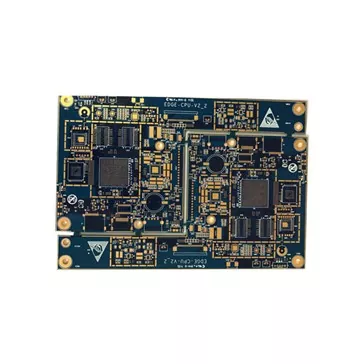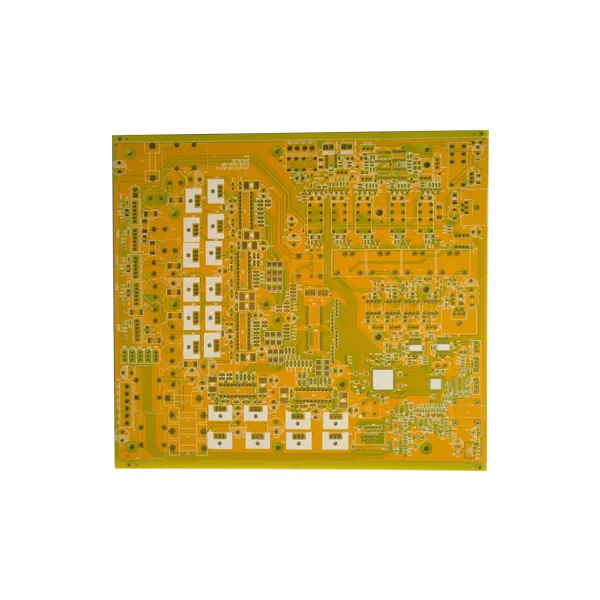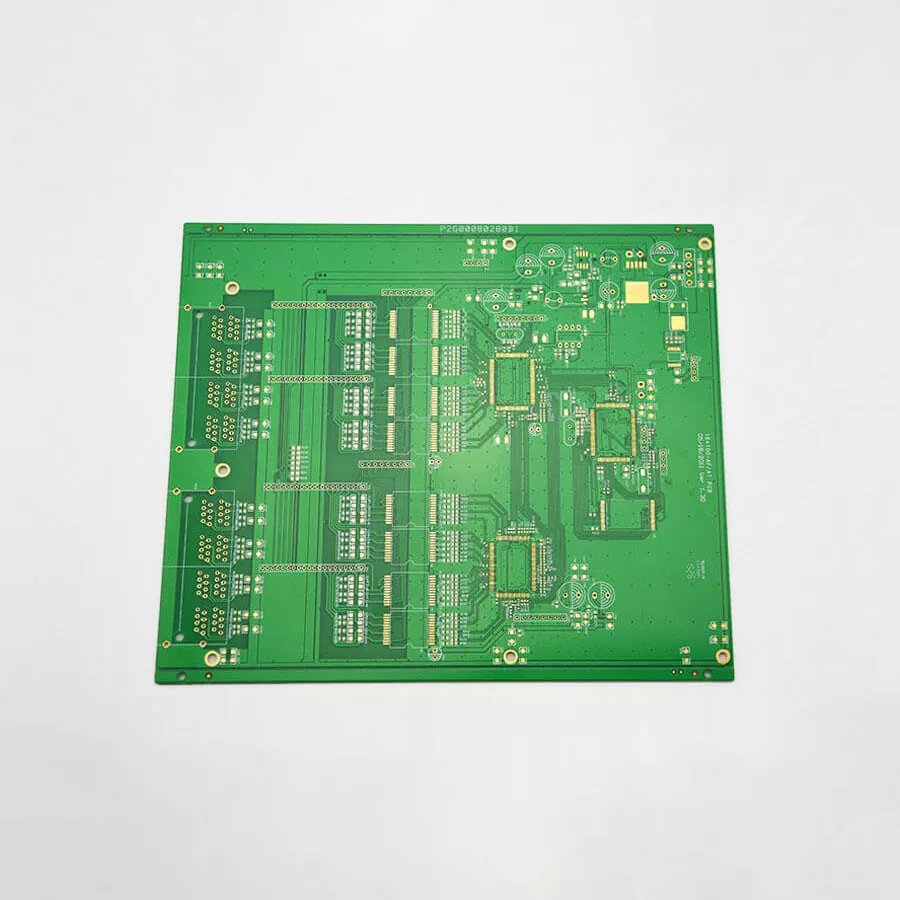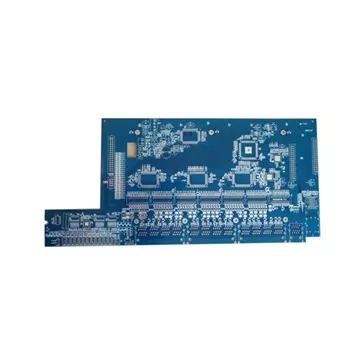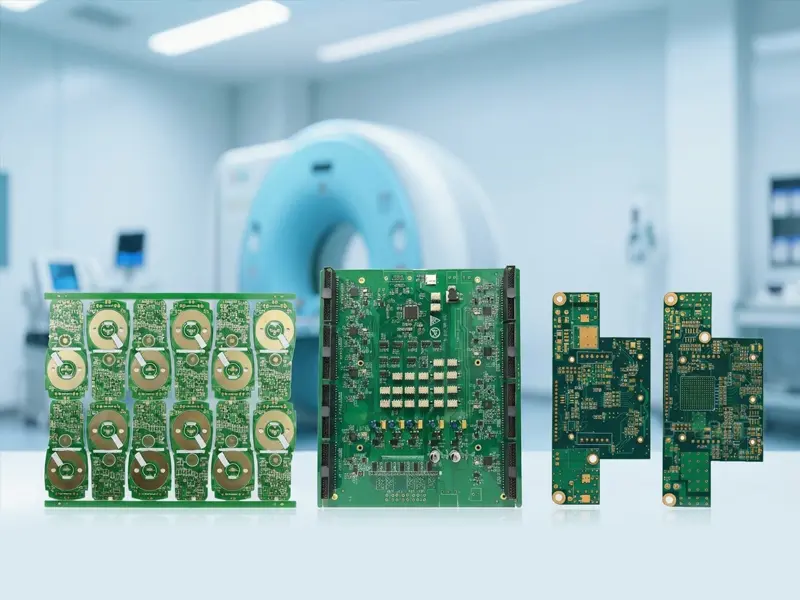

Medical Diagnostic Devices PCB
When your medical equipment needs the ultimate in reliability and precision, choosing the right Medical Diagnostic Devices pcb gets to be basic to your victory. At Akeson Circuit Co., we get it that healthcare innovation requests zero compromise on quality. Your patients depend on precise diagnostics, and we're here to guarantee your PCB establishments provide that exactness each single time. Our specialized fabricating forms are outlined particularly for the thorough requests of therapeutic electronics.
Medical diagnostic equipment depends on electronic circuits to convert biological, chemical, or physical information into measurable data. Inside these systems, the PCB connects sensors, signal processing units, processors, communication modules, and power circuits to ensure accurate data collection and stable equipment operation.
Aisen Electronics Co., Ltd. manufactures Medical Diagnostic Devices PCB including laboratory analyzers, biochemical testing systems, immunoassay instruments, and healthcare testing equipment. Our PCB solutions focus on signal stability, circuit integration, and manufacturing consistency for devices that require repeated measurement accuracy.
How Medical Diagnostic Devices Work and the Role of PCB
Medical diagnostic equipment usually follows a process of signal acquisition, signal conversion, data processing, and result output.
The sensor or detection module first collects information from biological samples or the human body. These signals are often weak and require amplification and filtering before being processed by the main control system. The PCB provides the electrical connection between these functional modules and ensures that signals are transmitted with minimal interference.
For example, in a biochemical analyzer, the detection module converts chemical reactions into electrical signals. The PCB then transfers these signals to processing circuits where data is analyzed and converted into readable diagnostic results.
The PCB is not only a connection platform. Its design directly affects signal quality, power stability, thermal performance, and long-term equipment reliability.
Why Medical Diagnostic Equipment Requires Specialized PCB Design
Medical Diagnostic PCB vs Standard Electronic PCB
Medical diagnostic equipment has stricter requirements than general electronic products because circuit performance can influence measurement consistency.
| Feature | Standard PCB | Medical Diagnostic PCB |
|---|---|---|
| Operating Environment | General electronics | Laboratory and healthcare environments |
| Signal Requirement | Normal data transmission | Sensitive measurement signals |
| Design Focus | Function and cost | Stability and accuracy |
| Operating Time | Intermittent use | Long continuous operation |
| Quality Control | Standard inspection | Detailed process monitoring and traceability |
Medical diagnostic PCBs require better control of signal interference, component reliability, and manufacturing consistency.
PCB Design Challenges in Diagnostic Equipment
Protecting Sensitive Signals During Measurement
Many diagnostic instruments depend on sensor signals that may be affected by electromagnetic interference, voltage fluctuation, or poor grounding design.
Aisen Electronics optimizes PCB structures through proper layer arrangement, signal routing control, and separation between analog and digital circuits. These methods help maintain stable signal transmission from detection components to processing units.
Integrating Multiple Functional Modules
A modern diagnostic device may combine:
- Sensor interfaces
- Signal amplification circuits
- Microprocessors
- Communication systems
- Power management circuits
These functions must operate together within limited space. Multilayer PCB technology allows engineers to separate different circuit areas while maintaining compact equipment design.
Aisen Electronics supports PCB manufacturing up to 32 layers, with fine-line processing down to 3mil and high-density interconnection capability for complex diagnostic systems.
Key Engineering Considerations for Medical Diagnostic PCB
Signal Integrity
Signal integrity is one of the most important factors in diagnostic equipment. Unstable transmission may cause data deviation or inconsistent testing results.
PCB stack-up design, impedance control, and routing optimization are used to reduce signal loss and electromagnetic interference.
Aisen Electronics supports controlled impedance manufacturing with ±8% tolerance for applications requiring stable signal performance.
Power Stability and Thermal Control
Diagnostic instruments often operate for long periods, creating continuous electrical and thermal loads.
PCB design needs to provide stable power distribution while controlling heat generated by processors and power components.
Solutions such as thicker copper layers, optimized power planes, and thermal management structures help improve operational stability.
Miniaturization and Component Density
Portable diagnostic devices require smaller PCB sizes without reducing functionality.
High-density PCB technologies allow more components and circuits to be integrated into limited space while maintaining manufacturing reliability.
Aisen Electronics supports fine-pitch component assembly, micro via structures, and multilayer designs for compact medical electronics.
Manufacturing Process for Medical Diagnostic PCB
Medical diagnostic PCB production requires strict process control because small manufacturing variations can affect equipment performance.
Aisen Electronics manages the complete manufacturing process from material inspection, inner layer processing, lamination, drilling, copper plating, surface finishing, to final electrical testing.
Each production stage is monitored to maintain consistent quality between prototype development and volume manufacturing.
PCB Materials and Surface Treatment Selection
Material selection depends on the diagnostic equipment's operating conditions.
For standard laboratory instruments, high Tg FR-4 materials provide stable electrical performance and mechanical reliability. For applications requiring improved signal characteristics, specialized PCB materials may be selected according to frequency and thermal requirements.
Surface treatments such as ENIG, OSP, immersion silver, and hard gold are available based on component type and assembly requirements.
Technical Capabilities of Aisen Electronics Medical PCB
Aisen Electronics supports different PCB structures for medical diagnostic applications:
| Parameter | Capability |
|---|---|
| Layer Count | Single-sided to 32 layers |
| Minimum Line Width/Spacing | 3mil/3mil |
| Board Thickness | 0.3mm - 5.0mm |
| Copper Thickness | Up to 6oz |
| Minimum Via Size | 0.1mm |
| Impedance Control | ±8% tolerance |
| Surface Finish | ENIG, OSP, Immersion Silver, Hard Gold |
Applications
Medical Diagnostic Devices PCB is used in equipment including:
- Blood analysis systems
- Biochemical analyzers
- Immunoassay testing equipment
- Laboratory diagnostic instruments
- Portable medical testing devices
- Healthcare monitoring systems
Each application has different requirements. Laboratory equipment usually prioritizes measurement stability and repeatability, while portable diagnostic devices focus on size, power consumption, and integration.
Quality Control for Medical Diagnostic PCB Production
Before shipment, each PCB undergoes inspection procedures including electrical testing, AOI inspection, dimensional verification, and final quality evaluation.
Aisen Electronics maintains manufacturing records covering material information, production parameters, and inspection results to support product traceability requirements.
Engineering Support from Aisen Electronics Co., Ltd.
Medical diagnostic PCB development requires cooperation between equipment designers and PCB manufacturers.
Aisen Electronics Co., Ltd. provides engineering support throughout the development process, including PCB design review, manufacturability evaluation, material selection guidance, prototype production, and volume manufacturing.
Our goal is to help medical equipment manufacturers build PCBs that match their electrical requirements, production plans, and application conditions.
FAQ
Why is PCB design important in medical diagnostic equipment?
PCB design affects signal accuracy, power stability, and communication between different electronic modules. A suitable PCB structure helps maintain consistent diagnostic performance.
What is the difference between medical PCB and normal PCB?
Medical PCBs require stricter control of signal integrity, reliability, traceability, and manufacturing consistency because they are used in equipment related to diagnosis and testing.
What PCB technologies are used in diagnostic devices?
Common technologies include multilayer PCB structures, controlled impedance design, fine-line routing, HDI technology, and high-density component assembly.
Can Aisen Electronics manufacture customized diagnostic PCB?
Yes. Aisen Electronics provides customized PCB fabrication and assembly according to equipment design requirements, production volume, and technical specifications.
Contact Aisen Electronics Co., Ltd.
If you are developing medical diagnostic equipment and need PCB manufacturing support, Aisen Electronics Co., Ltd. can assist with design evaluation, material selection, prototype development, and production manufacturing.
Our engineering team works with medical equipment manufacturers to optimize PCB structures, improve manufacturability, and support stable product development.
For technical discussions, PCB requirements, or production planning, please contact our team.
Email: violet@akesonpcb.com
Hot Tags: Medical Diagnostic Devices PCB Manufacturer, Custom Medical PCB Supplier, Diagnostic PCB Factory
Send Inquiry
Contact Info
-
Address
3D4B QiLinXinCun.QiLinYajiu songguang Bao’an Dist, Shenzhen Guangdong Province, China
-
Tel
-
E-mail
Contact Aisen Electronics for PCB and PCBA projects. Our engineering team provides customized solutions, fast response, and reliable manufacturing support.