
Breakthroughs in Aerospace PCB Technology and Market Expansion
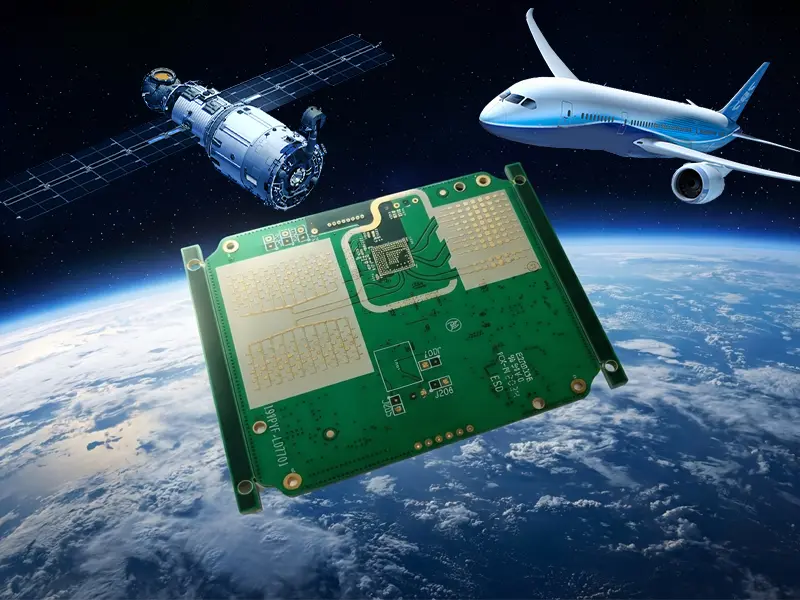
As global commercial space exploration enters a period of intensive launches, the printed circuit board (PCB) industry, which serves as the "framework" of aerospace electronic systems, is undergoing profound changes. In the first quarter of 2026, multiple key technologies and industry developments revealed the latest advancements in this field: from the successful verification of the rigid-flex integrated (Rigid-Flex) solar array on CubeSats, to the accelerated formulation of the national standard for microwave PCBs used by Chinese aerospace, and to the reconfiguration of the global supply chain for security, aerospace-grade PCBs are moving from single-piece customization to a new stage of high reliability and scalable manufacturing.
I. Technological Innovation: Integrated Rigid-Flexible PCB Achieves Space Flight Verification for the First Time
A study published in the journal "Acta Astronautica" in January 2026 revealed that the Australian Binar Space Program team successfully completed the world's first in-orbit flight test of a deployable solar array for a cube satellite based on a rigid-flexible PCB. This technology was applied to three 1U cubesats (Binar-2, 3, 4), which were deployed from the International Space Station on August 29, 2024, and completed a two-month mission.
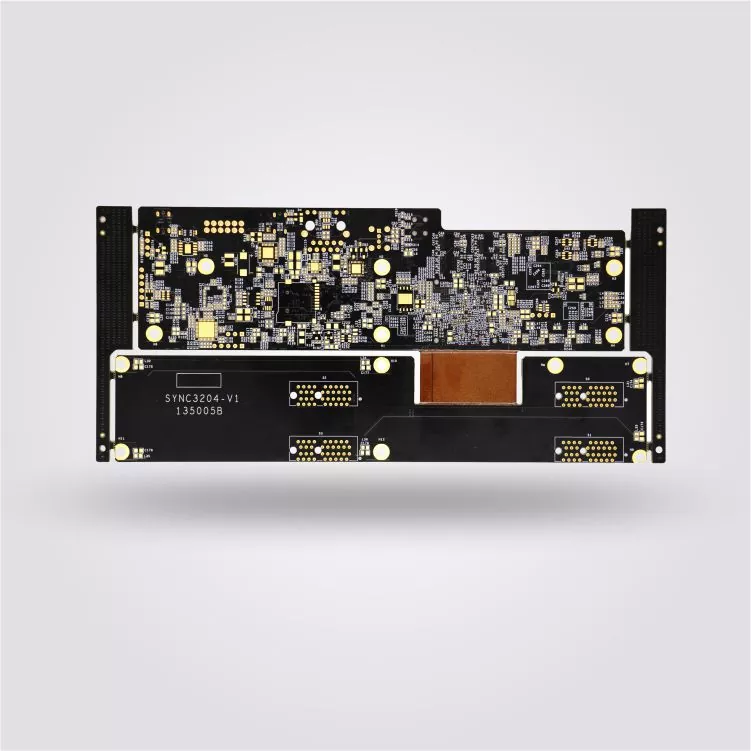
The core breakthrough of this design lies in the utilization of both rigid and flexible PCBs to simultaneously achieve structural support, circuit interconnection, and hinge functions. By using nickel-titanium shape memory alloy (Nitinol) as the driver, this solar array not only meets the stringent volume limitations of 1U CubeSats but also achieves a power density much higher than that of traditional packaged solar panels. The research indicates that this design shifts a large amount of manufacturing and quality assurance work to PCB manufacturers, significantly reducing the assembly complexity of microsatellites.
This achievement has verified the reliability of rigid-flexible PCBs in extreme space environments, providing a feasible path for the low-cost and high-integration energy systems of large numbers of small satellite constellations in the future. This design has successfully withstood more than 100 ground deployment cycle tests and vibration environments during the launch phase, demonstrating the potential of flexible circuit boards as the core components of space mechanisms.
II. Leading with Standards: China's Aerospace Industry Accelerates the Development of Microwave PCB National Standards
As technology undergoes rapid iterations, standardization efforts are also advancing simultaneously. In February 2026, the National Committee for Aerospace Technology and Its Applications Standards initiated the formulation of the "Specification for Microwave Rigid Printed Circuit Boards for Aerospace Applications" national standard. The project duration is 18 months.
This standard was drafted by Beijing Aerospace Guanghua Electronic Technology Co., Ltd. It aims to fill the gap in the existing "General Specifications for Printed Circuit Boards of Aerospace Products" (GB/T 39342-2020) regarding the microwave frequency band. The standard for the first time clearly defines the frequency range of aerospace microwave PCBs as 1-100GHz, covering the current mainstream Ka band (10-40GHz) and the future higher-frequency band application requirements.
It is worth noting that this standard sets out a number of stringent requirements for the special environment of aerospace: including appearance and reliability standards for wire bonding pads, acceptance criteria for resin agglomeration, requirements for total dose irradiation tests, and testing methods for electrical strength under low pressure conditions. Moreover, the standard has added QR code traceability requirements to meet the needs of quality control throughout the entire lifecycle of aerospace products.
The establishment of this standard will provide a unified technical basis for the large-scale manufacturing of commercial satellite constellations in our country, and promote the transformation of aerospace PCB from the "one satellite, one board" customized model to standardized and modular production.
III. Market Landscape: Dual-driven by AI and Aerospace, High-End PCB Demand Soars
According to the latest 2026 first-quarter report released by Prismark, the global PCB market achieved a significant 15.8% growth in 2025, reaching $85.2 billion. It is expected to further increase by 12.5% to $95.8 billion in 2026. Among them, the aerospace and defense PCB market has steadily grown from $1.36 billion in 2025 and is expected to reach $1.59 billion in 2030, with a compound annual growth rate of 3.2%.
Market research institutions have pointed out that the military/aerospace sector is one of the three fastest-growing electronic system sectors between 2025 and 2030, with a compound annual growth rate of 5.9%, trailing only servers/data storage (10.9%) and the industrial sector (5.5%). This growth is mainly driven by two factors: one is the accelerated deployment of global low-orbit satellite constellations (such as "Kai Feng Constellation", GW Constellation and SpaceX Starlink"); the other is the widespread application of unmanned aerial vehicle (UAV) systems in both military and commercial fields.
According to statistics, by the end of 2023, the number of registered drones in the United States had exceeded 855,000, and the global market value of drones reached 43 billion US dollars. In each drone and satellite, the usage of PCBs is as high as 20-30 pieces. This huge market growth is reshaping the industry landscape.
IV. Industry Response: Supply Chain Security and Capacity Expansion
In response to the increasing demand, global PCB manufacturers are accelerating the adjustment of their capacity layout. In March 2026, Indian DCX Systems, through its subsidiary Raneal Advanced Systems, announced the expansion of an ultra-large-sized PCB assembly line, capable of handling large circuit boards up to 55 inches in length, mainly for defense and aerospace applications. The company has received a 2 billion rupee order for the assembly of ultra-large-sized PCBs, demonstrating strong demand for aerospace-grade large-sized PCBs.
In terms of supply chain security, TTM Technologies of the United States announced at the end of 2023 that it would build a new ultra-high-density high-layer PCB factory in Syracuse, New York, aiming to enhance the local high-end PCB manufacturing capabilities in North America and meet the national security requirements of the defense and aerospace sectors. This factory will be developed into the most advanced PCB manufacturing base in North America, shortening the delivery cycle of high-end products.
Chinese PCB enterprises are also actively expanding their presence in the aerospace sector. Shennan Circuit has established the first domestic intelligent production line for aerospace-grade PCBs. Using laser direct imaging technology, it achieves sub-micron-level precise wiring, increasing the single-batch production capacity to 5,000 pieces and boosting production efficiency by eight times compared to traditional methods. Huilei Co., Ltd. has developed standardized aerospace-grade PCB modules that can be compatible with over 80% of commercial satellite models, reducing the product adaptation cycle from three months to 45 days.
V. Technical Challenges: Breaking Through the Limits of Materials and Processes
The extreme conditions faced by aerospace-grade PCBs impose requirements on materials and processes that are far beyond those of civilian products.
Thermal management is the primary challenge. In a vacuum environment, convective heat dissipation fails, and heat conduction and radiation become the only means of heat transfer. Aerospace-grade PCBs typically use a 2-ounce (oz) or thicker copper layer for the power and ground layers to achieve horizontal heat dispersion, while using a dense array of thermal vias to direct heat to the heat dissipation structure.
The choice of materials directly determines reliability. Polyimide, due to its glass transition temperature (Tg) of over 250°C and excellent vacuum gas evacuation performance, has become the preferred material for flexible circuit substrates. For high-frequency microwave circuits, Teflon-like materials with low dielectric constant (Dk) and low loss factor, as well as ceramic substrates (alumina, aluminum nitride), are widely used.
Gas emission pollution is a unique quality control point in aerospace. The National Aeronautics and Space Administration (NASA) and the European Space Standardization Cooperation Organization (ECSS) require a total mass loss (TML) of ≤ 1.0% and a collection of volatile condensable materials (CVCM) of ≤ 0.1%. This means that all PCB substrates, adhesives, coatings, and fluxes must undergo strict screening.
The reliability verification is much higher than the industrial standards. Take the case of the Hubble Space Telescope in 1999, where the power control unit failed due to micro-cracks in the through-hole (PTH) of the PCB. Aerospace-grade PCBs must undergo 100% screening, accelerated life tests, and destructive physical analysis (DPA). The thermal cycling test simulates the temperature fluctuations of the satellite crossing the Earth's shadow area thousands of times in orbit, ensuring that the solder joints and through-holes do not experience fatigue failure.
VI. Outlook: Technical Roadmap for Aerospace PCBs in 2030
Looking ahead to 2030, the development trends of aerospace PCB technology will be as follows:
High-frequencyization and integration: As satellite communication progresses to the Q/V band (40-75GHz) and even the terahertz frequency band, the control of PCB dielectric loss and signal integrity design will become a core technical barrier. The rigid-flex integrated design will expand from solar arrays to the entire satellite structure, achieving true "structure-function integration".
Radiation-hardening: In response to the space radiation environment, radiation-hardening will no longer be limited to semiconductor devices, but will extend to the PCB level. Total Dose Irradiation (TID) testing will become a mandatory requirement for aerospace PCBs.
Large-scale manufacturing and cost control: Commercial satellite constellations such as SpaceX Starlink are driving the transformation of aerospace-grade PCBs from "aerospace grade" to a cost structure of "vehicle-grade +". By adopting industrial-grade commercial components (IOTS) verified through flight tests and system-level radiation hardening, costs can be significantly reduced while ensuring mission reliability.
Domestication and Supply Chain Diversification: In the context of the Sino-US technology competition, various countries are accelerating the domestic production process of key materials (low-CTE glass cloth, ultra-low loss resin, HVLP copper foil) and manufacturing equipment for aerospace PCBs. Southeast Asia has become an important承接 area for the transfer of mid-to-low-end PCB production capacity, while high-end substrates and multi-layer boards are still concentrated in East Asia.
Conclusion
In 2026, the aerospace PCB industry is at a critical juncture where technological breakthroughs and market expansion converge. From the in-orbit verification of rigid-flex integrated circuits to the establishment of microwave standards for aerospace applications, and to the reconfiguration of the global supply chain for security, this key electronic component is providing a solid foundation for the large-scale development of commercial aerospace. With the continuous evolution of low-orbit satellite constellations, deep space exploration, and reusable launch vehicles, aerospace PCBs will accelerate their iterations towards higher frequencies, greater integration, greater reliability, and greater cost-effectiveness, supporting the continuous extension of humanity's exploration of space.
Previous :
-
Related News
- How Medical Electronics PCB and PCBA Improve the Reliability of Modern Healthcare Devices
- How Does Aerospace PCB and PCBA Improve Reliability in Advanced Aviation Systems?
- Set a new benchmark for high-end PCB manufacturing
- Medical electronic PCB/PCBA industry trends
- The meticulous manufacturing journey from design to production
Leave me a message